When Reiki Is Lived, Not Performed, Healing Deepens
Reiki does not need ceremony to be effective. Its deepest impact is often felt in ordinary moments—when a parent pauses before reacting, when a child senses calm instead of urgency, or when a household carries a steadier emotional rhythm.
When Reiki is lived rather than performed, it becomes part of how families move through everyday life.
Reiki Beyond the Session
Many people are introduced to Reiki through formal sessions or structured classes. While these experiences can be deeply supportive, Reiki’s true strength reveals itself when its principles extend beyond the treatment space.
Reiki is not only something we do—it is something we embody.
In family settings, this often shows up as a shift in presence rather than practice. A slower response. A softer tone. A willingness to pause before correcting or fixing. These moments may seem small, yet they quietly change the emotional atmosphere of the home.
https://wendylynnjohnson.com/why-i-teach-reiki-healing-families/ External Link
How Children Experience Lived Reiki
Children are especially receptive to what is embodied rather than explained. They notice tone, pacing, and emotional steadiness long before they understand words or concepts.
When Reiki is lived in the home, children often experience:
- a sense of safety without being told they are safe
- emotional moments that soften more quickly
- an easier return to calm
- a growing trust in their own inner experience
They are not learning Reiki as a technique. They are learning it as an environment.
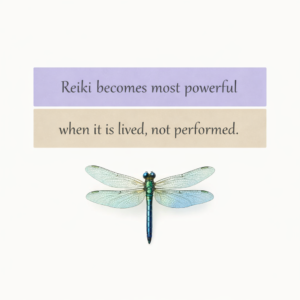
What Living Reiki Can Look Like in Everyday Family Life
Living Reiki does not require perfect calm or formal practice. It often appears in quiet, ordinary moments.
It can look like a parent pausing before responding to frustration—placing a hand on their own chest, taking a breath, and choosing presence over reaction.
It may look like sitting beside a child who is overwhelmed, saying very little, allowing the moment to pass without urgency to fix or correct.
Sometimes it looks like a child entering the room upset and being met not with instructions, but with steadiness and reassurance.
Often, it looks like nothing at all on the outside—just a slower pace, a softer voice, or a parent grounding themselves before engaging.
These moments are easy to overlook, yet they are where regulation is learned.
How Parents Begin to Notice the Shift
Over time, parents often notice subtle changes. Emotional moments shorten. Recovery happens more quickly. Children return to calm with less support.
Not because they were taught how—but because they experienced it.
Parents often find that their own reactions soften first. As they care for their energy, the household feels different. The nervous system settles more easily. Communication becomes less charged.
This is Reiki being lived, not announced.
Reiki as a Shared Family Language
When Reiki becomes familiar rather than formal, families begin to share a common language of calm. Emotional moments are approached with curiosity instead of urgency. Repair happens more naturally. Connection deepens.
This lived approach also creates a gentle bridge for families who later feel called to learn Reiki together—at their own pace, in a way that feels accessible and supportive rather than overwhelming.
Reiki becomes less about performance and more about relationship.
A Core Principle to Hold
Reiki becomes most powerful when it is lived, not performed.
This principle releases pressure and invites trust. It allows Reiki to support families in ways that feel natural, sustainable, and deeply human.
https://www.reiki.org/articles/what-reiki
Conclusion
Reiki does not ask families to add more to their lives. It invites them to relate differently—to themselves, to their children, and to the moments that matter most.
When Reiki is lived through presence, awareness, and intention, it quietly reshapes the emotional environment of the home. Healing becomes less about doing and more about being.