When Regulation Is Modeled, Not Taught
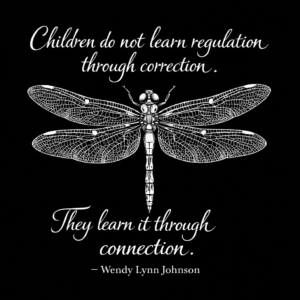
Many parents are taught to believe that emotional regulation is something children must be taught through correction, explanation, or discipline. Yet regulation does not begin with instruction. It begins with experience.
Children learn how to navigate emotions long before they understand them cognitively. They watch. They sense. They feel. Regulation forms through proximity to calm, not through being told what calm should look like.
This is where a shift becomes possible — not just for children, but for the entire family system.
Regulation Is a Relational Experience
Before children can regulate themselves, they rely on the nervous systems of the adults around them. This process is known as co-regulation, but it is less about technique and more about presence.
A parent’s breath, tone, and pace communicate safety. A steady adult nervous system offers a child something their body can borrow until it learns to return to calm on its own.
When parents slow themselves first, children often follow without force. Regulation happens quietly, beneath the surface, through felt safety rather than words.https://wendylynnjohnson.com/why-calm-cant-be-forced-and-what-actually-helps/
Why Many Parents Were Never Taught This
Many adults, especially those from Gen X and similar generations, were not taught how to feel emotions safely in their bodies. Regulation was often replaced with suppression, endurance, or self-control.
This does not mean parents failed. It means they were never given the tools.
When parents begin learning regulation alongside their children, something important happens. Emotional safety is no longer something they try to enforce — it becomes something they practice.
How Reiki Supports This Learning Process
Reiki supports regulation at the level where emotions live first: the body.
Rather than asking a parent or child to change how they feel, Reiki creates an environment where the nervous system can soften naturally. When the body settles, emotions become easier to navigate. Thoughts slow. Reactions soften.
For families, this means regulation becomes a shared experience rather than a demand placed on a child.
To learn more about Reiki as a holistic practice, visit:
https://www.reiki.org
When Regulation Becomes a Way of Life
When calm is modeled consistently, children begin to recognize it as familiar. They learn that emotions move through the body and can return to balance without fear.
Over time, this builds emotional resilience. Children gain confidence in their ability to feel, pause, and recover. Parents gain trust in themselves as steady, capable guides — even when emotions run high.
This is how regulation becomes lived rather than taught.
Conclusion
Children do not need perfect parents.
They need present ones.
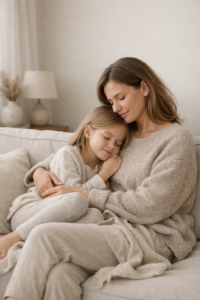
When parents model calm, emotional awareness, and gentle self-regulation, children learn those skills organically. Reiki supports this process by reminding the body what safety feels like — without pressure, performance, or force.
Regulation, when learned this way, becomes something families grow into together.