Blog
-
The Moment You Realize You’re Parenting Your Younger Self
The Moment You Realize You’re Parenting Your Younger Self When Your Child’s Emotion Feels Bigger Than the Moment There is a moment that almost every parent experiences — though not everyone recognizes it. Your child reacts strongly. They cry loudly. They resist. They question. They feel deeply. And something inside you reacts just as strongly.
-
You Were Never Wrong for Being Wired That Way
You Were Never Wrong for Being Wired That Way The Child You Once Were Is Still Listening There was a time when I believed something about me needed to be corrected. I was too sensitive. Too emotional. Too questioning. Too intuitive. And because I wanted to belong, I learned to adapt. I learned to silence
-
Trusting the Inner Guidance You Were Taught to Ignore
Trusting the Inner Guidance You Were Taught to Ignore The Voice You Were Told Not to Trust There was a time in my life when I did not trust myself. Not my instincts. Not my gut. Not the quiet inner knowing that rose up when something didn’t feel aligned. I had been taught that listening
-
Self-Reiki Is More Than Calming — It Is Spiritual Healing
Self-Reiki Is More Than Calming — It Is Spiritual Healing There was a season in my life when I believed I just needed to “calm down.” If I could breathe better… If I could think more positively… If I could react less… Everything would settle. But what I slowly discovered through practicing Reiki on myself
-
When Your Child’s Emotions Trigger Your Own
When Your Child’s Emotions Trigger Your Own I was raised in an environment where emotions were not explored — they were managed. Crying meant weakness. Questioning meant rebellion. Listening to your inner voice meant danger. So when my child cried loudly, resisted, or expressed intense emotion, something in me reacted before I even had language
-

How Teens Learn to Regulate Energy in a World That Never Slows Down
How Teens Learn to Regulate Energy in a World That Never Slows Down Teenagers live in a constant state of input. Expectations, social pressure, academic demands, identity formation, and emotional intensity all converge at once. Teens nervous systems are still developing, yet they are often asked to function as if they are already adults.
-
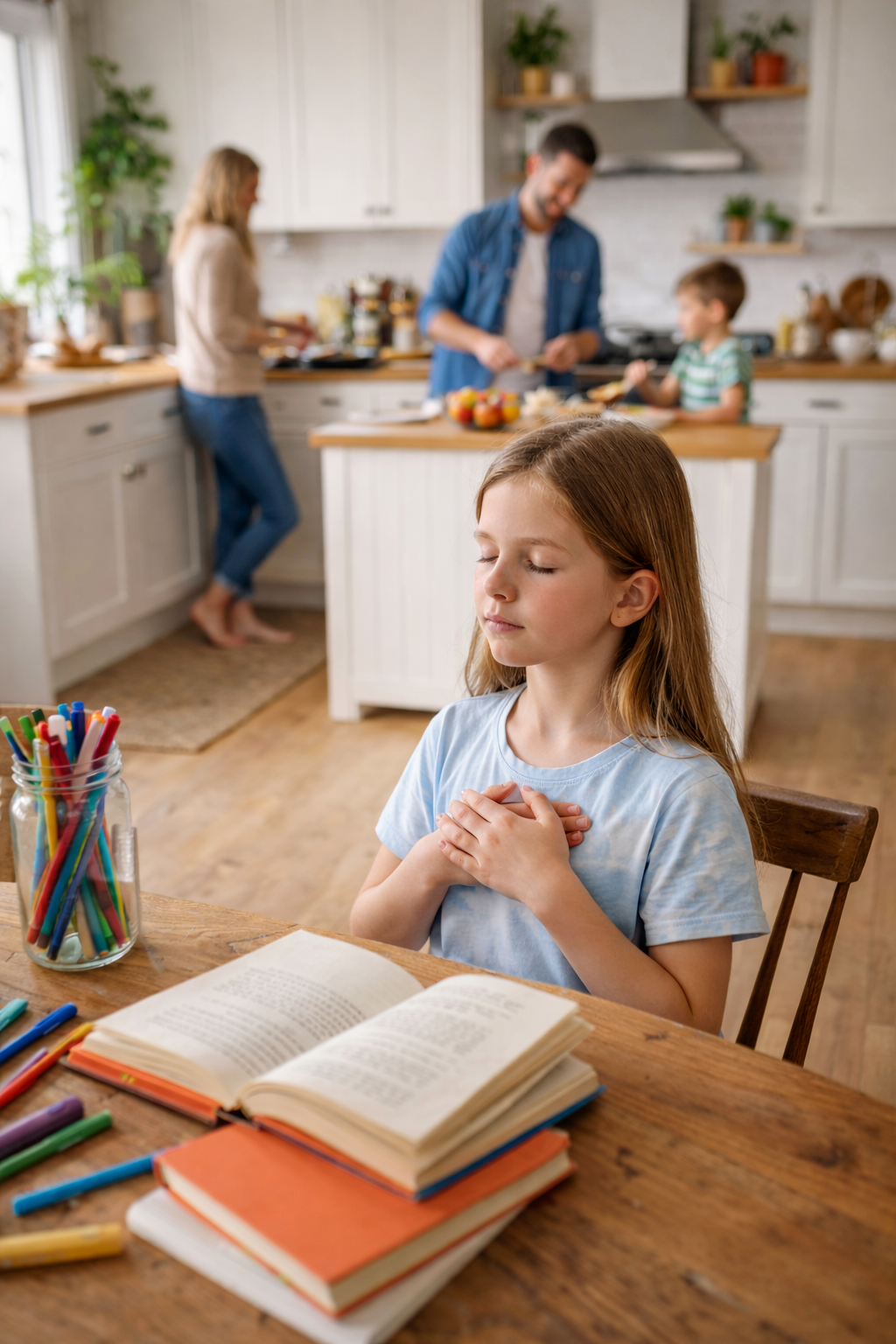
When Children Begin Exploring Self-Soothing on Their Own
When Children Begin Exploring Self-Soothing on Their Own Children do not need to be taught how to soothe themselves before they are ready. They need to feel what regulation looks like first. When parents consistently model presence, self-care, and emotional awareness, something subtle begins to unfold. Children start experimenting on their own. Not because they
-

Self-Reiki as a Daily Practice for Parents
Self-Reiki as a Daily Practice for Parents For many parents, the idea of caring for themselves can feel unrealistic. Life is full. Children need attention. Responsibilities pile up. And for those of us raised to push through, rest and self-care were often framed as indulgent or unnecessary. But self-Reiki is not about adding something extra
-

How Self-Healing in Parents Restores Balance in the Family
How Self-Healing in Parents Restores Balance in the Family Children are deeply perceptive. Long before they understand the words we use, they sense the emotional and energetic undercurrent of the adults around them. They feel tension in the room. They notice when stress goes unspoken. They respond to what is held beneath the surface. Many
-

When Parents Begin Healing, Children Stop Carrying the Weight
When Parents Begin Healing, Children Stop Carrying the Weight Children are deeply perceptive. Long before they understand the words we use, they sense the emotional and energetic undercurrent of the adults around them. They feel tension in the room. They notice when stress goes unspoken. They respond to what is held beneath the surface.