Difference Is Not Dysfunction
One of the most challenging—and misunderstood—parts of parenting is realizing that children do not respond to life in the same way. What works beautifully for one child may completely miss the mark for another. This difference often creates confusion, frustration, and self-doubt for parents who are doing their best.
Many parents were taught to look for what is wrong when a child struggles. But often, nothing is wrong at all. The child is simply wired differently.
Difference explains experience.
It does not define identity.
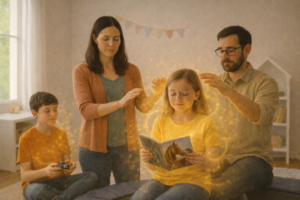
Children Experience Energy in Unique Ways
Some children wake up full of energy and move through the day with enthusiasm and momentum. Others need slow mornings, quiet transitions, and time to warm up before engaging. Some children thrive in busy environments, while others become overwhelmed quickly.
These differences are not behavioral issues.
They are energetic realities.
Children experience the world through their nervous systems first. Their sensitivity to sound, emotion, movement, and stimulation varies widely. When these differences are misunderstood, children may be labeled as difficult, unmotivated, emotional, or inattentive—when in truth, they are responding exactly as their systems are designed to respond.
Why Comparison Creates Confusion
Comparison often sneaks into parenting quietly. Parents may notice that one child completes tasks quickly while another struggles to begin. One child follows directions easily, while another resists structure. One child needs frequent rest, while another seems energized by constant activity.
When parents compare children—especially siblings—it can unintentionally create pressure and shame.
Children begin to sense that their natural way of being is somehow inconvenient or wrong. Parents may feel they are failing because one approach does not work for everyone.
In reality, parenting becomes more effective—not harder—when difference is understood.
The Nervous System Leads the Way
Before children can regulate emotions, complete tasks, or respond calmly, their nervous systems must feel safe. Some children regulate through movement. Others regulate through stillness. Some need connection before direction. Others need space before engagement.
There is no single correct way.
When parents slow down enough to observe how each child responds to stress, transition, and rest, patterns begin to emerge. These patterns are not problems to solve—they are information to honor.
To explore how children learn emotional and energetic patterns through their environment, this article may be helpful:
Energetic Blueprint Children Learn From
https://wendylynnjohnson.com/energetic-blueprint-children-learn-from/
How Energy Awareness Changes Parenting
When parents begin working with energy—whether through Reiki, mindfulness, or presence—they often become more attuned to subtle shifts in their children. They notice when energy rises too quickly, when overwhelm is approaching, or when a child needs grounding rather than instruction.
This awareness allows parents to respond rather than react.
Instead of asking, “Why won’t my child behave?”
The question becomes, “What does my child need right now?”
This shift alone can transform family dynamics.
Supporting Children Without Forcing Change
Children do not need to be fixed to thrive. They need to be understood.
When parents honor energetic differences:
- power struggles decrease
- emotional safety increases
- communication improves
- self-trust develops naturally
Children feel seen rather than managed. They learn that their way of experiencing the world is valid, even when it differs from others.
For insight into how temperament and nervous system differences shape child development, this resource offers grounded support:
https://www.childmind.org/article/understanding-temperament/
Preparing for Deeper Understanding
As parents grow more comfortable recognizing differences, they often begin searching for frameworks that explain why these patterns exist. This curiosity is natural and healthy.
Understanding difference does not mean labeling children.
It means removing judgment.
In time, families may explore systems that help explain energy patterns more clearly. For now, awareness is enough.
Conclusion: Honor the Design
Every child arrives with a unique way of engaging with the world. When parents honor this design rather than resist it, connection deepens and pressure softens.
Parenting does not require sameness.
It requires understanding.
When difference is honored, children flourish—not because they are changed, but because they are supported.