Reiki and the Nervous System: How Children Learn Calm Before Words
When Calm Is Felt Before It Is Understood
Children do not experience the world through explanation first.
They experience it through sensation.
Before a child can describe anxiety, frustration, or overwhelm, their body is already responding. Muscles tighten. Breathing changes. Emotions move faster than language. This is why many children struggle to explain what they feel — they feel it long before they can name it.
When we understand this, the focus shifts. Emotional regulation is no longer about correcting behavior. It becomes about supporting the nervous system where the experience actually begins.
Calm Is Learned Through the Body
Children are not born knowing how to self-soothe.
They learn calm through repeated experiences of safety.
A regulated nervous system develops when a child is near adults who move slowly, speak gently, and remain emotionally present. Over time, the child’s body begins to recognize that big feelings do not mean danger. Calm becomes familiar.
This is why telling a child to “calm down” rarely works. Regulation is not taught through instruction. It is learned through experience.
How Reiki Supports Nervous System Regulation
Reiki works with the body’s natural capacity to settle and rebalance. It does not require a child to analyze their emotions or explain what they feel. Instead, it supports awareness, presence, and gentle energetic flow.
Many children respond to Reiki by:
- slowing their breath naturally
- softening muscle tension
- feeling grounded and supported
- becoming more aware of internal sensations
These responses signal a nervous system shifting out of stress and into safety.
This is why Reiki can be especially supportive for children who experience anxiety, emotional sensitivity, or overwhelm. It meets them where they are — in the body — rather than asking them to reason their way out of distress.
For a foundational overview of Reiki as a holistic practice, visit:
https://www.reiki.org
The Role of Parents in Teaching Calm
Children borrow regulation before they develop it themselves.
A parent’s presence, pacing, and emotional steadiness communicate safety far more powerfully than words. When parents slow their own breathing, soften their tone, and stay connected during emotional moments, children often respond instinctively.
This is where generational healing begins.
Many adults were never taught how to feel emotions safely in their bodies. Reiki offers parents an opportunity to develop this awareness alongside their children. When calm becomes a shared experience in the home, it becomes part of daily life rather than a special intervention.
If you’d like to explore how children learn energetic patterns through their environment, this article may be helpful:
https://wendylynnjohnson.com/energetic-blueprint-children-learn-from/
Reiki as a Way of Life, Not a Technique
When Reiki is practiced regularly in the family home, it becomes second nature. Children observe it as something normal — a way to pause, reconnect, and settle.
They begin to learn:
- how to notice early signs of overwhelm
- how to return to calm gently
- how to trust their internal signals
This lived experience builds emotional resilience. Calm is no longer something external or earned. It becomes something familiar and accessible.
Building Calm That Lasts
When children feel safe in their bodies, everything changes. Communication improves. Emotional reactions soften. Confidence grows. Calm becomes a baseline rather than a goal.
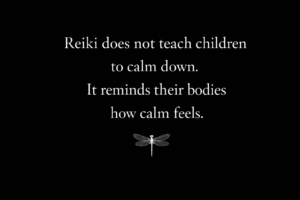
Reiki supports this process by reminding the body of what calm feels like — not through effort, but through presence.
This is how emotional regulation becomes sustainable.
This is how families shift together.
Conclusion
Children do not need to be taught to calm down.
They need opportunities to feel calm in their bodies.
When parents bring Reiki into everyday family life, calm becomes something shared, modeled, and learned. Over time, this creates a foundation of emotional safety that supports children long before they have the words to explain their inner world.